What is urban logistics?
Urban logistics refers to the transport movements of goods and services that start and end in city centres. It sits at the intersection of three major components: urban development, quality of life in that environment, and economic activity. That makes it a foundation of how cities are planned and run. Managing it means optimising the performance of each of those elements. Urban logistics brings together several overlapping realities:
- the flows generated by retail, industrial and service businesses;
- the journeys individuals make to buy their own supplies;
- ancillary transport such as waste collection, public transport, and so on.
We all know the city remains a fundamental place of trade and consumption. All the more so now that delivery volumes have grown enormously. Today’s supply chain challenges, combined with sharper competition, have driven many changes in the approach businesses take. Assessing supply chain performance raises plenty of questions and limitations. Businesses need to identify their problems and their limits in order to work out how to improve the system they have. How did urban logistics emerge?
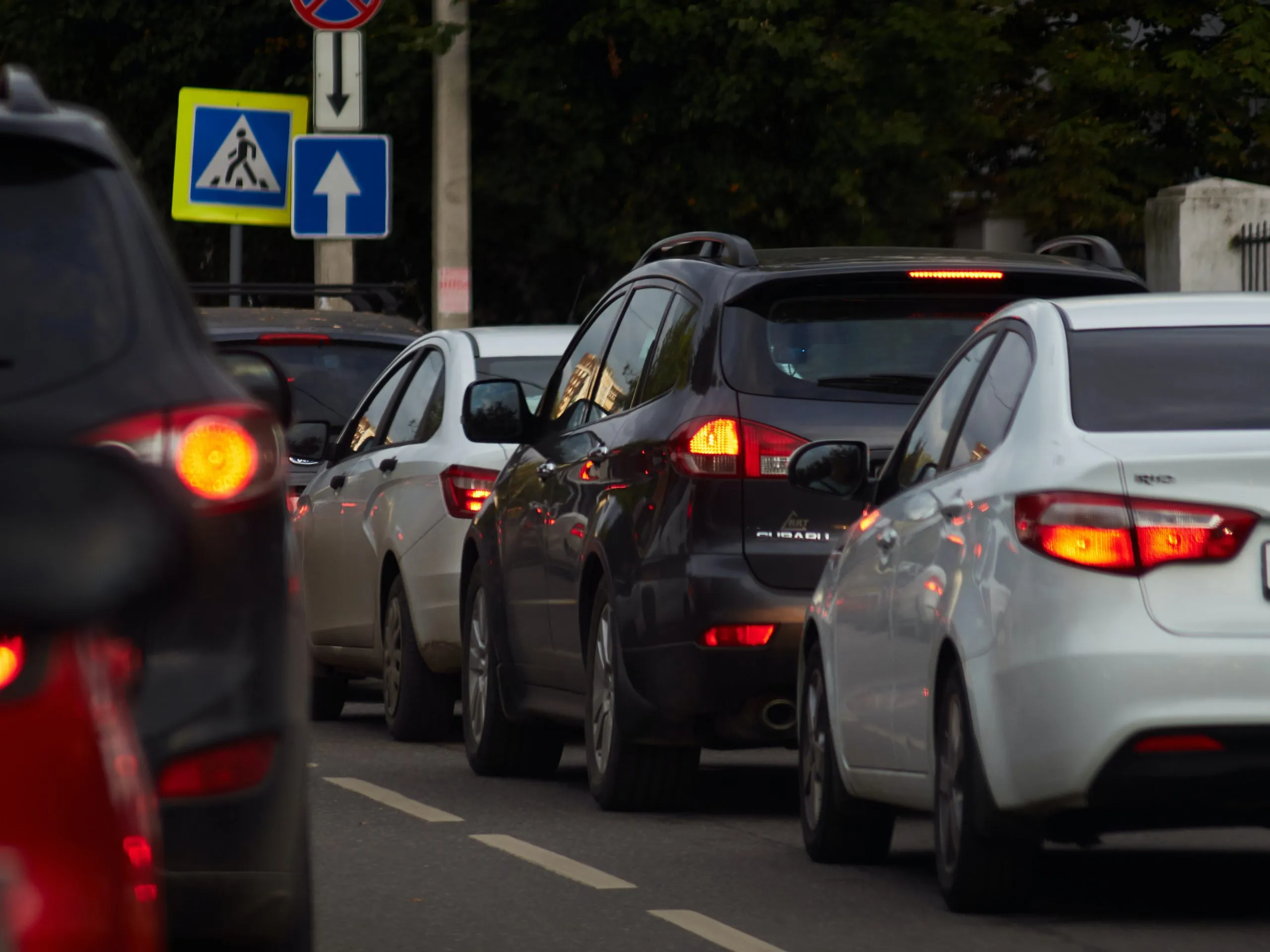
A growing population and congested city traffic
The considerable growth in the population of large cities is an unavoidable cause of road congestion. Journeys multiply without the roads getting any wider. It has also pushed businesses to move closer to their customers. The direct consequence of that strategy is a significant rise in the number of points of sale. With demand for products growing and customers expecting personalisation, shops are running out of storage space.
Buying behaviour that keeps growing more complex
Under pressure from consumers who buy more and more online and expect constant speed, logistics has to change. Deliveries multiply, and with them an ever-larger flow of vehicles through city centres. The appetite for e-commerce and express delivery does not only clog the roads, it also carries serious environmental consequences. Greenhouse gas emissions, noise pollution, poor urban air quality, and so on. Logistics suffers too: vehicles sit in traffic jams every day, and deliveries run late. And then there is the effect on residents’ quality of life. Whether on public transport or in their own car, they lose hours to urban congestion. Rethinking urban logistics has become essential for everyone in the system.
Urban logistics: plenty of challenges to meet
Last-mile delivery: a punishing cost
Logistics professionals know it: the final stage of the chain, the one that happens inside cities and is known as last-mile delivery, is the most expensive. On its own it accounts for around 20% of total supply chain costs. Plenty of couriers are even reluctant to deliver inside cities. One of the biggest obstacles to efficient urban logistics is urban congestion. Traffic is a growing problem in many parts of the world. Freight networks are increasingly tied together by congested roads and railways. The rise in online shopping makes getting products to customers harder still.
Environmental constraints are everywhere
Responsible for 35 to 50% of CO2 emissions, the transport sector has to be rethought. Freight transport accounts for 15 to 20% of those emissions. Urban logistics therefore sits at the heart of environmental concerns. On top of pollution and noise comes a political management problem around parking and the use of urban space. If the plan is to cut traffic lanes and push drivers out of their cars and onto public transport, the space set aside for delivery parking shrinks with them. Because the challenges depend on each other, the urban logistics problem becomes much harder.
Fitting logistics into the city is hard
Putting logistics warehouses inside cities is very difficult. For obvious safety reasons, they have to stay outside urban areas.Supply chain management begins at inland distribution hubs. With modern technology, businesses increasingly have access to land and infrastructure beyond the traditional ports of call. Those businesses can, however, place limits on the land they own. Many developed cities also face limited access to road and rail networks because of a lack of government support and investment in public transport. Many cities suffer from poor infrastructure and limited road and rail capacity as well, which severely reduces a company’s ability to meet customer demand.One major threat concerns the transport of dangerous goods, which is more commonly handled by road. If an urban freight operator had to carry hazardous chemicals, for instance, it would probably have to cross several different borders and other environmental restrictions.Likewise, if the goods carried are radioactive, that poses a number of risks to health and to the environment. Security of the goods is a concern in urban freight too. For an urban logistics company carrying asbestos, the danger of the transport is obvious. Especially given the recent outbreak of mesothelioma cases across the United States.
What levers does urban logistics have?
Lever 1: pool transport flows
Pooling flows is a substantial lever in the urban logistics problem. Trials of pooled transport in city centres are being assessed as we speak.The aim of the strategy is to fill vehicles more fully and avoid running empty wherever possible. But that is not all. Pooling can cover delivery bays or equipment too. Using the same vehicle for several customers improves the load factor and splits the cost. Pooling logistics management also means building in reverse logistics. Collecting empty crates and packaging, or e-commerce returns, plays an important part in optimising urban logistics. Shippr fights hard against vehicles running empty. Algorithms are applied to every delivery so the mode of transport matches the goods to be delivered. With a wide fleet running from cargo bikes to 20m3 vans, Shippr is sure to find the right vehicle for every parcel delivery. Shippr already runs reverse logistics as well.
Lever 2: use several modes of transport
Diversify transport modes
With so many modes of transport available, businesses are testing which ones reconcile logistics efficiency with quality of life. That is why multimodal delivery strategies are taking shape. Some retailers combine rail and road, for example. They use the train first to move goods to warehouses on the edge of the city. Lorries then take over inside the urban area.
Look for greener vehicles
Research and development in transport is also producing several green alternatives. Between electric vehicles, gas-powered vehicles and noise-reduction systems, solutions keep appearing to improve quality of life in the city. Research into biofuel has shown that it can be produced by treating fermented waste. That would cut methane emissions and could fuel the natural gas vehicles (NGV) used in urban logistics.
Lever 3: restore logistics land
The picture today is clear: logistics has been pushed out of cities for a long time. Driven by low transport costs and the price of land, that distance has increased mileage and pollution. Carriers’ productivity took a hit and fell.Yet logistics platforms are essential to a working supply chain. Restoring logistics land is therefore a strategy worth taking seriously. Various solutions are emerging:
- schemes to identify and reserve land so that space stays available at affordable prices;
- innovative, sustainable projects such as logistics hotels that mix complementary operations;
- multi-purpose “city hubs” that meet strict environmental quality standards and house several different spaces. Loading and unloading bays, offices, areas for order preparation and storage, and so on.
Lever 4: control where delivery vehicles stop and how they get there
Plenty of delivery bays have been created in cities in recent years. Built to meet steadily rising demand, these urban logistics facilities are often occupied by private cars. The consequence for delivery vehicles is heavy. Couriers have no choice but to double-park. That simple failure to respect urban logistics space has knock-on effects. When drivers are forced to stop temporarily in the road, they often block other vehicles. Tighter enforcement of urban parking is therefore key. Solutions such as dedicated enforcement teams and technology are being examined to find an effective way of stemming the problem.
Lever 5: bring retail and logistics together
Retail and logistics are often treated separately, even though they are closely linked. Urban logistics covers supplying city-centre shops just as much as home delivery. Home delivery has boomed for many reasons:
- an ageing population that prefers to have goods brought to the door;
- falling car ownership among city households, who prefer to walk or take public transport;
- a rise in online shopping of every kind, from basic needs to fun purchases
- a wish to save time that outweighs saving money
- the ever more pervasive presence of the internet in the home
- an inability to move bulky parcels on public transport
- weighing up how far it is to the supermarket and how hard the shopping is to carry home from it
- estimating the time lost to urban traffic congestion
- and so on.
All of this, alongside constant technological and logistical progress, makes home delivery hugely popular. Demand is strong, but the supply to meet it remains fairly thin. The difficulty of the urban environment puts plenty of obstacles in the logistics sector’s way. It is therefore crucial that the two fields are thought about together, so that supply can match the population’s demand for delivery.
Urban logistics: a challenge to solve every day
Rising population density in cities, changing habits and the boom in deliveries have forced urban logistics to emerge. Sitting at the intersection of transport, the economy and the environment, its importance is enormous. Despite the many environmental, economic and logistical challenges in the way, urban centres have already developed strategic levers. Logistics players such as Shippr contribute at their own scale to the solutions that will optimise and unclog cities. A same-day delivery specialist that faces the complexity of urban transport every day, Shippr works for logistics that are efficient and, above all, sustainable.
Need a logistics ally to run and manage your last-mile deliveries? See what Shippr can do for you.