Have you ever come across this situation: a customer walks into your shop and heads straight for a product they saw on your website. After searching in vain, they ask a member of staff, who tells them the product they came for is out of stock. Disappointment and frustration for the customer, a lost sale for you: stockouts can have heavy consequences for any business. The possible causes are many, so how do you manage to reduce stockouts? This guide gives you the keys.
When do we talk about a stockout?
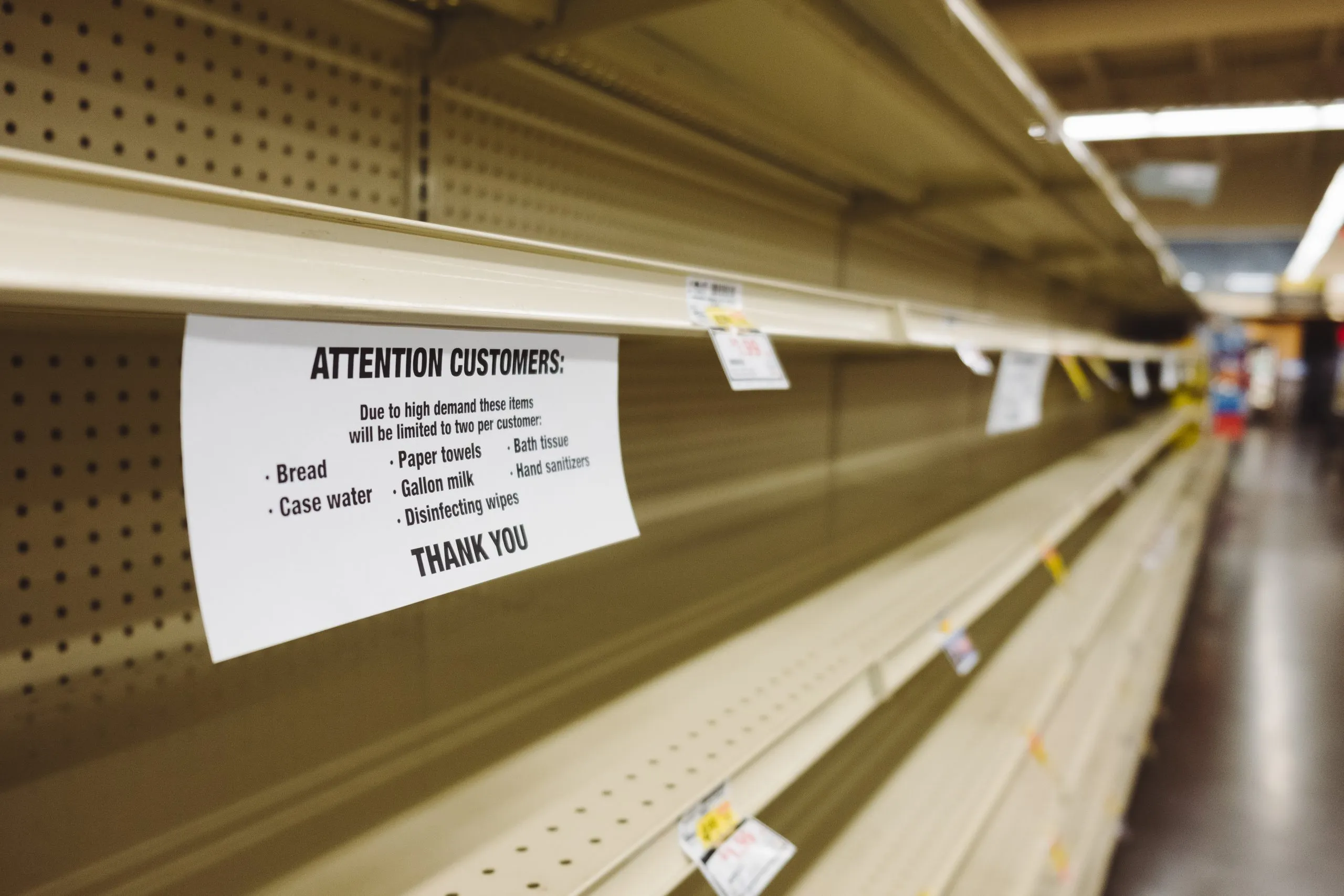
A stockout is when the reserves of a product run dry while demand is still there. No further sale of that product is possible, because it is unavailable. A stockout can be a sign of success: it reflects strong demand for the product and therefore rising revenue. But it can also reflect a lack of anticipation, or poor stock management. It is always better avoided, and yet it happens more often than you would think. According to studies in 2018-2019, the stockout rate was close to 6% in French hypermarkets. According to the ECR-IRI barometer, that cost those retailers more than 1.2 billion euros in 2018.
Why is preventing stockouts important?
Repeated stockouts can destroy customers’ trust in your brand and push up customer service costs. For online and bricks-and-mortar retailers alike, customers end up dissatisfied with the service and the buying experience on offer. Being out of stock on products your customers want means loss. You lose the sale, you lose your customers’ trust, and you risk pushing them towards your competitors. And if they have a good experience there, they may never come back. Here is how the Harvard Business Review describes it: “Stockouts cause walkouts”. That is as true of retail shops as of online shops. Online, it is even easier for customers to leave your site, compare and buy elsewhere. That is why preventing stockouts belongs at the top of any company’s priority list. Stockouts have one universal quality: they are bad for almost everyone in the online commerce chain, namely suppliers, buyers, sellers and customers.
Also worth reading: How do you optimise your stock management?
What can cause a stockout?
If it happens so often, that is because it can arise from any number of factors, such as
- An unexpected spike in demand
- Poor stock management
- A gap between recorded quantities and reality
- A poor process for anticipating needs
- An imprecise safety stock calculation
- Inaccurate inventories
- Human error in the supply chain
- Inefficient replenishment and restocking
- Poor warehouse operating practices
Those are only some of the reasons stockouts happen. The good news is that most of them can be avoided with the right processes and the right management. There are specific measures you can take to avoid stockouts.
What should you do once the stockout has happened?
If the stockout has already happened, transparency with your customers is the way to go. It limits the damage by reducing their sense of frustration. Imagine not telling them and leaving them waiting impatiently for their product: with trust broken, they might well go to a competitor, or harm your brand by leaving a negative review. Honesty shows that you and your business are serious.
How do you reduce stockouts?
So how do you stop stockouts hurting your business? Here are the actions that can help:
1. Forecast
The first key action for reducing stockouts is anticipation. Obvious as this step is, it is still fairly complex to put in place. Plenty of factors go into a forecasting strategy: seasonal variation, demand peaks, busy periods (the sales, for example), promotions and so on. To make your forecasts as close to reality as possible, you should:
-
Analyse your sales history and the life cycle of your products (launch, growth, maturity or decline)
-
Allow for the margin of error in the estimates you make
-
Forecast the seasonality of your sector, and therefore the activity peaks you can expect
-
Work out your forecasts over the short and medium term
Tracking certain logistics indicators also helps you keep good control of your stock. Those indicators are:
-
The stock turnover rate, which shows how many times total stock was sold through over the year.
-
The stock clearance time, which measures the time a product takes to sell through.
-
Stock cover, which tells you how many days your stock will be able to meet demand for.
-
And the stockout rate, which measures how often stockouts happen and lets you estimate the losses so you can adjust your next orders.
2. Build up different reserve stocks
Directly linked to the previous point, foresight is what limits the risk of running out. Reserves are what counter it, and several kinds of stock have to be put in place, namely:
Safety stock. This surplus stock exists to absorb the unexpected, the shortfalls and the swings in demand. It stops an unprecedented peak in activity catching you out, and it guarantees a minimum level of available products. To know when the safety stock threshold has been reached, you need an alert system in place. Restocking orders can then be automated. That said, it is better not to keep this stock indefinitely: it would become “dormant” stock, and that means additional costs.
Pool stock A slight surplus of stock that lets you react quickly to small daily variations in demand
Decoupling stock This stock lets you quickly replace a product, or part of a product, with another.
3. Get yourself stock management software
Stock management software gives you a global, constantly updated view of your current stock level. For your inventory to be accurate, you have to reduce human error as far as possible: one problem with manual processes is that they are more prone to mistakes. That is why stock management software is a real asset at the heart of your warehouse operations. By choosing a continuous inventory strategy, where every movement in or out of stock is recorded instantly, you avoid the risk of running out. Some software produces replenishment reports that tell you when your stock levels drop below the quantity you want. No more nasty surprises between the real stock level and the one written down by hand. The software’s precision gives you a view at any moment and lets you plan better.
4. Cut delivery times
By cutting product delivery times, that is the gap between an order being placed and being fulfilled, you reduce the risk of running out of stock. Manufacturing time is of course harder to optimise: that depends on your manufacturer or supplier and you have very little room for action there. You can, however, optimise the delivery times for those products. How? By calling on an external same-day delivery partner such as Shippr. Same-day delivery is Shippr’s speciality, and it runs every kind of delivery service: express, scheduled, fragile and bulky. Because the deliveries are tailored, you can call on Shippr when you need to restock, or for transfers between your warehouses and your points of sale, for example.
Would you like to discuss your delivery needs with one of our experts? Contact us and find out which delivery solutions fit your business and your needs.