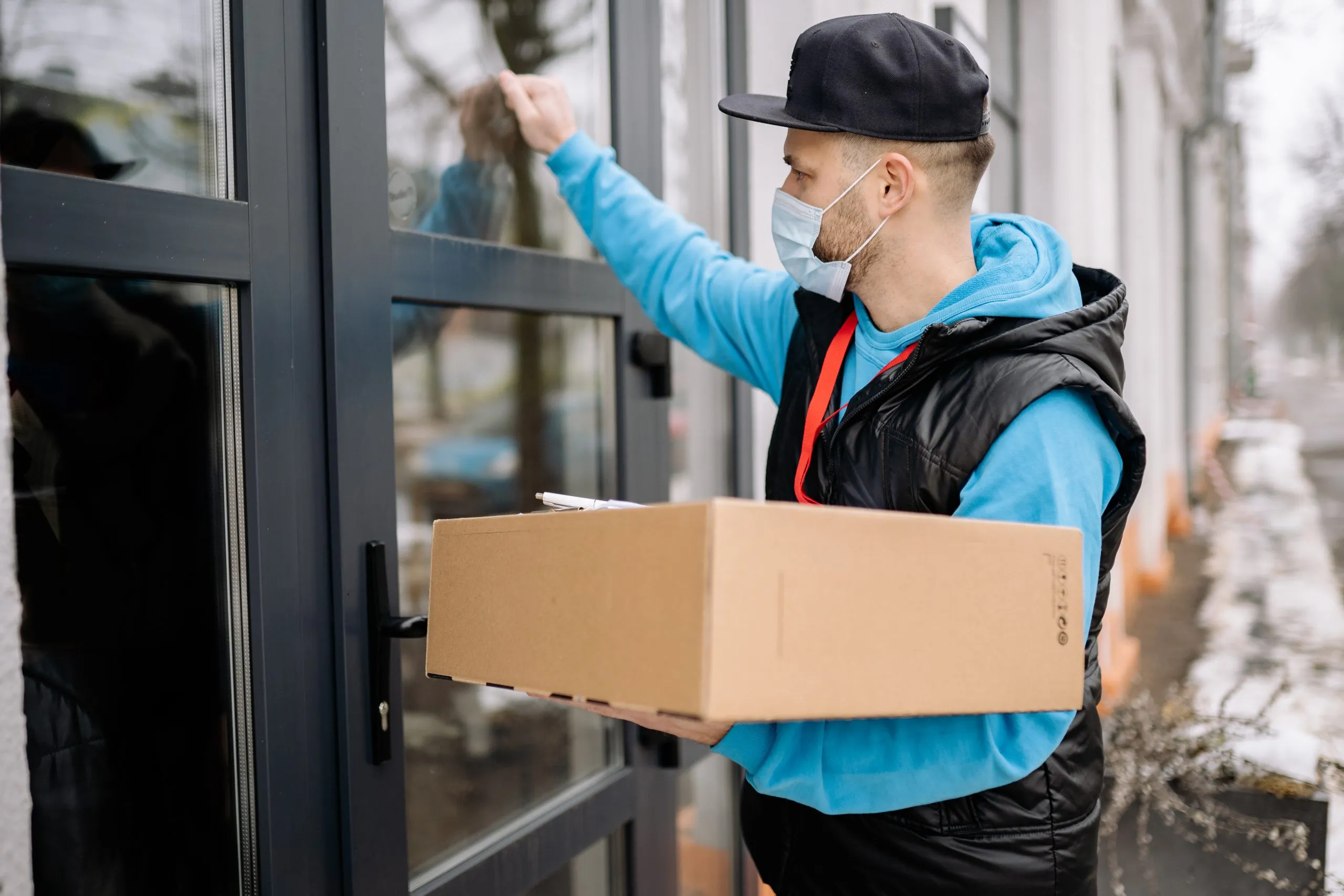
Deliveries have become routine for businesses in every sector. Parcel tracking is now a basic part of what goes with every consignment. For recipients and senders alike, it takes much of the anxiety out of this stage of the journey. Here is what else it does, along with the best ways to put it in place easily.
Why set up parcel tracking for your customers?
Take the anxiety out of delivery
Knowing where their parcel is at any moment reassures your customers. Real-time information clears away the fog around a delivery and gives them peace of mind, all the more so because consumers are looking for visibility and transparency. Delivery being a crucial moment, those two things are key to building trust between your business and your customers. Take late deliveries, one of the most common customer complaints. Guaranteeing that every delivery arrives on time is hard in an environment with so many moving parts. City-centre traffic, an accident on the road: the unexpected is part of logistics. For recipients with no communication and no way of seeing whether the parcel is on its way, that anxiety risks souring the whole buying experience, even if the parcel arrives in perfect condition. Because tracking software is so transparent, your customers can check the status and exact location of a parcel themselves, whenever they want. That settles their worries, not least when there is a delay or another problem. Simple as it is, the gesture says a lot about how professional your business is, and gives people something to hold on to. An informed customer is a satisfied customer.
Encourage your customers to buy from you again
If your customers know that they will be told through a tracking link even when a delivery runs late or goes wrong, they will be far more inclined to buy from you again. In reality, consumers have plenty of similar services to choose from. Naturally, they compare what your competitors offer with what you offer. Customers have high expectations of delivery, and they take parcel tracking as a given. So by showing your dispatch and delivery policies clearly and supplying tracking information, you make potential customers more inclined to come to you.
What does parcel tracking do for you as the sender?
Real-time tracking has obvious advantages on the customer side, but it has plenty for you too.
Keep a constant view of where your parcels are
As the sender, the tracking link lets you check that your parcels have reached their destination. If something goes wrong, you have what you need to pinpoint where the parcel is and where it is stuck. That way you can react effectively and defuse any tension with your customers. A customer who sees you involved and professional in a situation like that will be more understanding.
Take the load off your support team
Reassured by the information parcel tracking gives them, your customers are far less likely to contact your support team by phone, chat or email. Your team is therefore less likely to be swamped by customer questions and complaints. For you as the sender, tracking is a real gain.
How does parcel tracking work?
At Shippr, we offer real-time parcel tracking on every delivery, automatically. Through a tracking link, you and your recipients can follow a parcel at any moment. The link comes in emails sent automatically at every point of contact with your customers, and in text messages too. The emails keep your customers posted at each stage of their order. To find out more about real-time parcel tracking at Shippr and start using it, book a slot with one of our business experts.
Setting up parcel tracking: best practice
Offering parcel tracking is one thing. Setting it up and making sure your customers use it is another.
- Give a tracking number for every order
Tracking numbers are essential to orders running smoothly. Each string of digits is unique and tied to one specific order, and it is how customers find out where their parcel is. Without it, they cannot follow it at all, and that lack of transparency adds to the stress around delivery. For the best possible customer experience, the number should be as visible as possible from the moment the customer buys. To do this well, some companies send an order confirmation email containing the tracking number.
- Let your customers track their parcels through several channels
There are of course several ways for your customers to follow their orders. Ease of use and visibility should always come first when you choose a tracking tool. You can build the feature into your own website, for instance. By entering the parcel number mentioned above, your customers get an immediate view of where their order is.
Another way to do it is to put the tracking link inside emails. According to a 2020 ParcelLab study, 61% of consumers preferred email as the channel for delivery updates. Free, easy and simple to automate, email is a very effective channel.
Text messages are also gaining ground, and they reach your customers even more directly with no risk of landing in spam. The same ParcelLab study found SMS to be the second most popular channel.

- Give an estimated delivery date and time
For the customer, the estimated delivery date and time are the two most important things in parcel tracking. Ideally, they should be the first information a customer sees when buying. In the tracking messages themselves, by email or SMS, those two details should come first. If you can, give the approximate time the delivery will arrive.
- Set up automatic notifications
As we have said, parcel tracking is essential for keeping customers informed at every stage of their order. Setting that up at each touchpoint can get complicated. To make it easier, you can automate your tracking notifications. Send automatic emails as soon as the order status changes. That keeps your customers up to date on where their parcel is, and reassures them.
Logistics traceability vs parcel tracking
These two terms are often confused and used interchangeably. Is there really a difference? Logistics traceability identifies where a particular product came from. It accounts for every stage the product has been through, from processing to final delivery. It also tells you which raw materials went into it and what was done at each step of the process. Tracking, or parcel tracking, is, as we have seen, the ability to follow the journey of an order. It tells you the route a parcel takes, which makes delivery times easier to work out. Tracking is in a sense one type of product traceability. It is used above all for online purchases, which by definition need to be delivered.
Parcel tracking: one of the keys to a delivery experience that works
Now a must in delivery, parcel tracking benefits customers and senders alike. Offering it on your deliveries is essential if you want to keep customers satisfied and, in turn, loyal.
Get in touch today to find out more about our delivery services and the real-time tracking that comes with them.