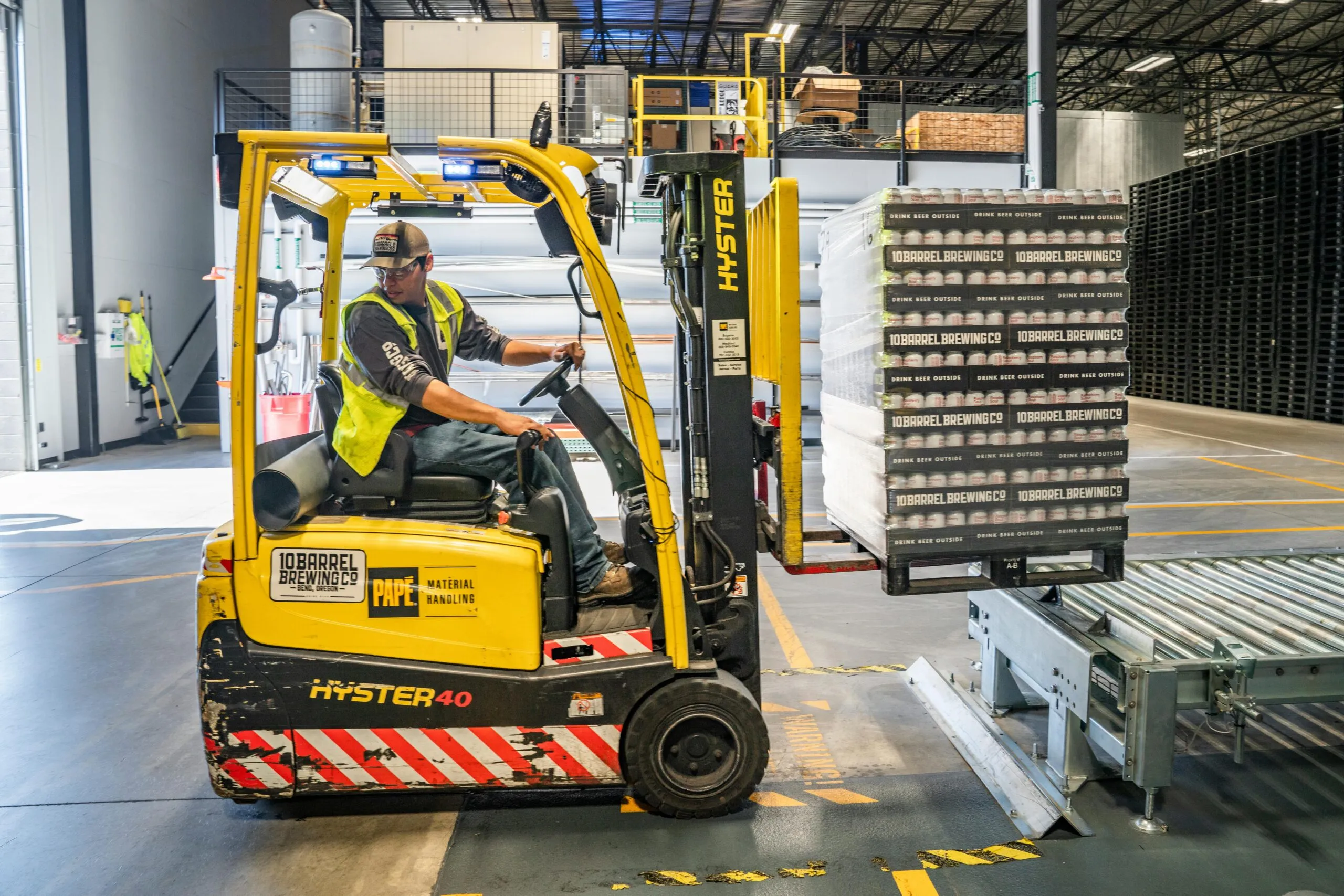
Your business is a real success. You are delighted to see your products selling like hot cakes. That said, for that success to last, you have to optimise the way you process orders. Holding up your side of the bargain, by delivering the right product to the right place, in the right quantity and in the shortest time, shows your customers you are serious and they will appreciate it. So how do you put an optimal order preparation system in place? Some answers in this article.
What is order preparation? A definition
Order preparation is an essential logistics process in the supply chain: gathering, packing and preparing the products a customer has ordered so that they can be shipped. It therefore comes once customers have finalised their order.
More precisely, the process covers several stages, namely:
-
- Taking the products out of storage (also known as “picking”)
- Grouping the items together
- Packing and wrapping the products securely
- Shipping the products to the customer
This operation is crucial, and it now sits at the centre of companies’ and supply chains’ concerns. Productivity and the company’s reputation depend on it.
What is at stake in order preparation?
Order preparation is a decisive factor in customer satisfaction. It puts the company’s brand image on the line. To judge how serious and how reliable a retailer is, buyers often go on how fast the delivery is and on the quality of the product they receive.
What matters to them is receiving the product they ordered as soon as possible, in good condition and in the right quantity. That leaves the seller no room for error, which is why managing the order process properly matters.
Beyond the dissatisfied customer, poorly optimised order preparation brings significant costs. Handling a product return or correcting a shipping error costs both time and money.
Errors and incidents during order preparation
Incidents are common during order preparation. It is nonetheless important to reduce them as far as possible in order to protect the company’s image. The most frequent errors are:
-
- picking the wrong item
- the wrong quantity of goods
- items scattered across the warehouse
- a forgotten product
- the wrong packaging
- incorrect labelling
Several factors can be behind these errors. To minimise them, it is worth using an automated storage management system.
The stages in processing a customer order
Processing an order takes place mainly in 4 stages:
-
- planning
- choosing the picking route
- picking the goods
- packing and preparing the order for shipping
1. Planning order preparation
An order is processed by preparing in advance. That means planning the tasks involved meticulously, so that everything goes as well as it can. It is essential if the customer is to get a faultless service.
Good preparation also saves you time and money. This stage is essential to optimising the management and allocation of your human, material and time resources.
2. The picking route
With the planning done, the second step is to work out the picking route. This stage means deciding on and following a route to take the goods from where they are stored to the packing area. The process takes a lot of time and resources. You can do without it, however, by adopting the “goods to man” system.
There are two ways of moving the goods:
-
- “Goods to man”, where the items are brought automatically to the operator by machines.
- “Man to goods”, where the picker moves through the warehouse to fetch the products from stock.
3. Picking
Picking is the collection of the products the customer has ordered and the preparation of the parcel. This phase is the crux of order preparation. Most errors happen at this stage, which is why staying alert matters.
It is strongly recommended that you use a good control system to carry out the task. These days, order pickers are guided by systems such as a voice-directed device or a digital or radio-frequency terminal.
4. Packing and preparing the order for shipping
The final stage of order processing is checking the items collected against their reference and their quantity in stock. Once that check is done, the products have to be wrapped so that they reach the customer in good condition. After that, all that remains is to move the parcel to the shipping area.
What are the different types of picking?
There are three types of picking:
-
- by item
- or by wave
- or by zone
Which type of picking to adopt depends mainly on:
-
- the warehouse layout
- the picking route
- the quantity of goods
- the type of flow
Picking by item
The operator prepares orders one after another in the order they arrive. This picking method is ideal for collecting a large quantity of the same reference.
Picking by wave
The picker takes a large quantity of the same product in order to prepare several orders at once. It is the fastest picking procedure.
Picking by zone
Picking by zone means dividing the warehouse into several zones. Each one is the responsibility of a single picker, who picks only the goods held in their own zone.
The different guidance systems for controlling picking
Under the man to goods system, the picker has to be equipped with a good guidance system. Having that equipment is crucial for avoiding order preparation errors, because the system makes it easy to find:
-
- where the product is in the warehouse
- who the customer is
- the order number
- the item reference
- the parcel number
There are various kinds of guidance system:
-
- The on-board computer terminal: fitted with a scanner listing the picking instructions, it lets the picker confirm that an item has been taken.
- Voice guidance, or “pick by voice”: the operator wears a headset connected to a radio unit, through which they receive their instructions and confirm the pick out loud.
- Pick by light: lights are placed in the racking and come on to show the operator where the items to be picked are.
How do you optimise your order preparation?
You now understand the process to follow when handling orders. But you are probably wondering how to optimise it and make it run more smoothly. Here are the levers to pull:
-
- Give the picker the right information (location in stock, quantity of items to pick, product code, order number, customer name, and so on).
- Cut preparation time by setting the routes in advance, keeping the aisles clear and storing your best-selling products in the most accessible places.
- Make order preparation run more smoothly with good stock management.
- Avoid errors by using a reliable guidance system.
- Take care over how the items are packed.
- Protect the picker by maintaining the handling equipment and putting heavy objects on the lower shelves.
Once you have an efficient order preparation process in place, the rest of the supply chain has to be just as efficient. Managing deliveries, and the many operational surprises that come with the job, takes time. To optimise that management and win back hours for your core business, one effective solution is to choose an external logistics partner such as Shippr. Contact us to discuss your delivery needs with one of our business experts.