Have you ever heard of the transport of dangerous goods? This closely monitored form of transport moves sensitive goods such as chemicals, gases and explosives. But how do you keep that kind of delivery safe? This is where ADR comes in — the European Agreement concerning the International Carriage of Dangerous Goods by Road. This article explains what the agreement covers, the requirements you have to meet, the training involved and the penalties for failing to comply. It opens the door to a type of transport that is heavily regulated, but very much in demand.
What is ADR?
The European Agreement concerning the International Carriage of Dangerous Goods by Road (ADR) is a key agreement governing the road transport of dangerous goods in Europe. Signed in Geneva in 1957 by the United Nations Economic Commission for Europe (UNECE), ADR is now a central instrument for ensuring safety and protecting the environment when goods that carry risks are moved. ADR sets strict rules for the transport of dangerous goods. They cover the classification of hazards, packaging, marking and labelling requirements, and the documentation needed. There are also specific provisions for vehicles and transport equipment, and for the training and certification of the drivers involved.
What is ADR for?
The main aim of ADR is to minimise the risks to public health, road safety and the environment when dangerous goods are transported. It seeks to harmonise national regulations and make international trade easier while guaranteeing a high level of safety and protection. By complying with ADR, everyone involved in moving dangerous goods — shippers, carriers and recipients — helps prevent accidents and incidents that could have serious consequences for people, property and the environment. Compliance with ADR is therefore essential for any business or driver involved in transporting dangerous goods in Europe.
Classifying dangerous goods under ADR
Classifying dangerous goods under ADR is a crucial step in keeping their road transport safe and compliant. The classification lets carriers, drivers and the authorities quickly identify the risks attached to each type of goods and take the right precautions. Here is how ADR classifies dangerous goods, and why that classification matters so much.
The 9 hazard classes
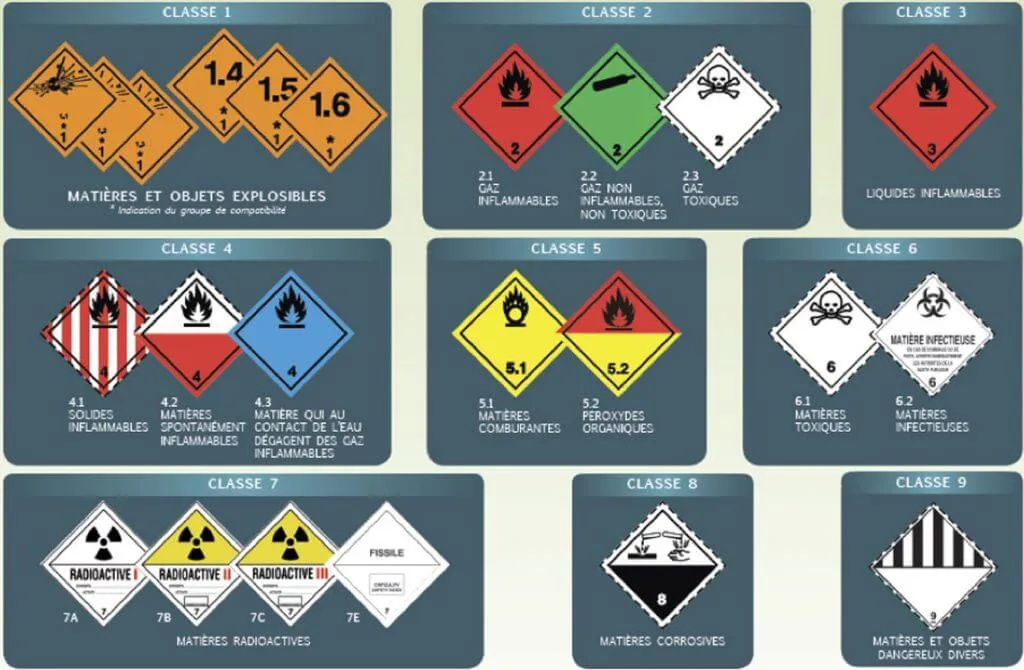
ADR divides dangerous goods into nine main classes, each representing a specific type of hazard. The classes are:
-
Explosive substances and articles
-
Gases
-
Flammable liquids
-
Flammable solids; substances liable to spontaneous combustion; substances which, in contact with water, emit flammable gases
-
Oxidising substances and organic peroxides
-
Toxic and infectious substances
-
Radioactive material
-
Corrosive substances
-
Miscellaneous dangerous substances and articles
Each class is broken down into several divisions and, where relevant, into packing groups, according to the nature and intensity of the risks involved. Class 2, gases, for example, is split into flammable gases, non-flammable and non-toxic gases, and toxic gases. Packing groups (I, II and III) are used for classes 3, 4, 5, 6, 8 and 9 to indicate how dangerous each substance is.
Hazard codes and hazard labels
Alongside the classes, ADR also uses codes and identification numbers (UN numbers). They identify each dangerous product uniquely. This information is essential for the documentation, labelling and marking of packages and vehicles.
Understanding the ADR classification of dangerous goods, and applying it correctly, is essential to transport that is safe and compliant. As a transport professional, it is your responsibility to know the classification and to make sure dangerous goods are correctly identified and handled throughout their journey.
Source: ac2f.fr
ADR requirements for vehicles and equipment
As the key regulation for the road transport of dangerous goods, ADR sets out a strict set of requirements for the vehicles and equipment used, so that transport stays safe and compliant. As a transport professional, understanding and meeting those requirements is essential if you want to move goods safely and avoid costly, dangerous incidents. Here are the main ADR requirements for vehicles and equipment, and why they matter.
1. Vehicle construction and type approval
First, ADR requires that vehicles used to transport dangerous goods be specially designed and approved for the job. They must be fitted with the appropriate safety features, such as:
- reinforced braking systems
- fire suppression equipment
- protection against accidental spills
2. Signage and marking
Vehicles carrying dangerous goods must also be clearly signed and marked. How? With the appropriate hazard labels and the identification numbers of the goods being carried (UN numbers). That lets other road users and the authorities recognise the risks attached to the vehicle quickly and act accordingly if there is an incident.
- Fire extinguishers,
- Personal protective equipment (PPE) kits
- Explosion-proof tool boxes
- Earthing equipment
3. Mandatory safety equipment
Vehicles carrying dangerous goods must carry a specific set of safety equipment. It includes:
This equipment is essential to keep the driver safe and to limit the risks in the event of an accident or a spill.
4. Regular inspection and maintenance
Finally, check the vehicles and equipment used to transport dangerous goods regularly to make sure they work properly and still meet ADR requirements. Transport operators must keep an up-to-date record of the inspections and maintenance carried out on each vehicle.
Training and certification of ADR drivers
Driver training and certification play a crucial part in the safety of dangerous goods transport by road. ADR sets specific training and certification requirements to make sure drivers are properly prepared for the challenges and responsibilities that come with carrying these products.
ADR training
ADR training for drivers covers a wide range of subjects, so that drivers understand dangerous goods and transport procedures thoroughly. The topics include:
- the classification of dangerous goods
- packaging and labelling requirements
- loading and unloading procedures
- emergency measures in the event of an accident or a spill
This in-depth training allows drivers to identify and manage the risks of transporting dangerous goods effectively.
Additional specialist training
In some cases, drivers may be required to take specialist training for particular dangerous goods, such as radioactive material, petroleum products or infectious substances. This additional training makes sure they are ready for the specific challenges and requirements that come with those types of goods.
ADR training certificate (CFA)
After their training, drivers must sit an exam to obtain their ADR certificate, also known as the driver training certificate (CFC). The certificate proves that the driver has the knowledge and the skills needed to carry dangerous goods safely by road. The CFC is valid for a period of five years and must be renewed before it expires, so that drivers stay up to date with the regulations and procedures in force.
Preparing and packaging dangerous goods
Preparing and packaging dangerous goods are crucial steps in keeping transport safe and compliant. As a driver handling and carrying these sensitive products, you need to understand and follow the specific preparation and packaging requirements. Everyone’s safety depends on it.
1. Identifying dangerous goods
Before you package anything, identify the dangerous goods correctly against the ADR classification. That classification determines the packaging, labelling and documentation requirements that apply to the shipment.
2. Choosing the right packaging
Dangerous goods must be packed in containers and packaging specifically designed and approved to withstand the risks attached to the type of goods being carried. ADR sets packaging and performance standards for each class of dangerous goods, along with requirements for packaging testing and certification.
3. Labelling and marking
Every package containing dangerous goods must be clearly labelled and marked with precise information. That includes:
- the description and classification of the goods
- the UN numbers
- the hazard pictograms
- and the handling instructions
This information is essential to tell carriers, the authorities and emergency responders what risks the goods carry.
4. Transport documents
Whenever you carry dangerous goods, always make sure you have the transport documents that apply to them. They include:
- the carrier’s declaration
- the safety data sheet (SDS) and, where relevant,
- the packaging approval and certification documents
These documents give detailed information about the goods, the risks involved, the preventive measures and the emergency actions to take if there is an incident.
Checks and penalties for ADR non-compliance
ADR checks are carried out by the competent authorities to confirm that the road transport of dangerous goods complies with the ADR regulations. They can be random or targeted. They may include inspection of:
- the vehicles
- the equipment
- driver training and certification
- the documents
What are the penalties for breaching the regulation? If you fail to comply with ADR, both drivers and the business face penalties. They vary with the nature and seriousness of the breach and with the national rules in force in each member country. Here are some examples of the penalties you may face:
- Fines: minor or moderate ADR breaches can earn you a fine. A minor breach means a failure to meet labelling, documentation or training requirements. The amount varies with how serious the breach is and with national regulations.
- Formal notice: the competent authorities can issue a formal notice requiring the business or the driver to correct the non-compliance within a set period. Fail to fix what has been flagged in time and you face further penalties.
- Vehicle immobilisation: for a serious ADR breach, the authorities can immobilise the vehicle until you resolve the non-compliance. That can delay deliveries and add costs for the transport company.
- Suspension or withdrawal of ADR certification: if you do not meet ADR requirements, your driver training certificate (CFC) may be suspended or withdrawn. You would then be unable to carry dangerous goods until you obtain a new certification.
- Legal proceedings: in the most serious cases of ADR non-compliance, you and your business may end up in court. That can lead to criminal penalties, substantial fines and even prison sentences.
Hold an ADR certificate and work as a professional driver? Find out how to become a Shippr partner driver and grow your monthly income by picking the deliveries that suit you in the app.